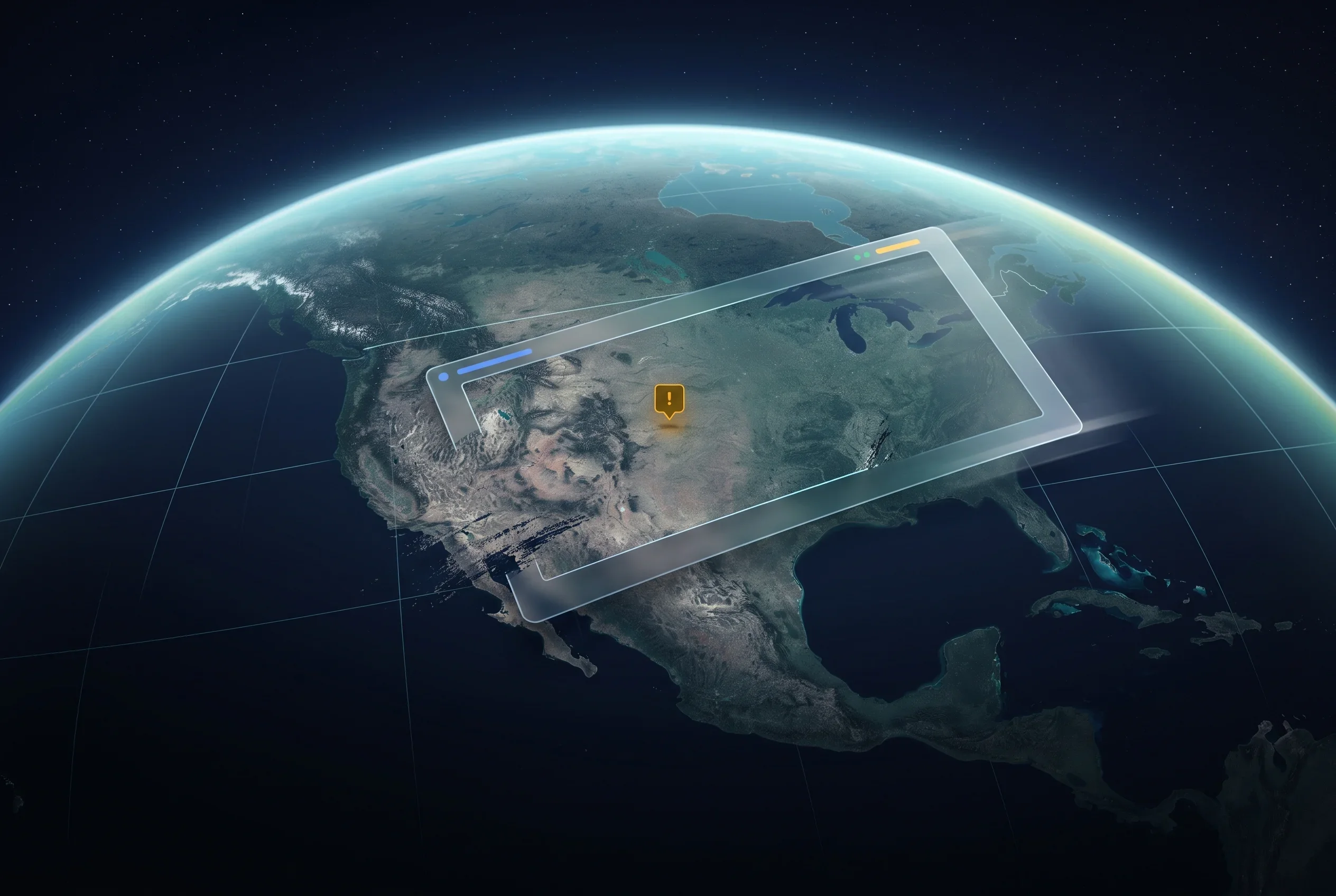
Google Pulls Google Earth's Image Generation Feature One Day After Launch
Google rolled back the Nano Banana 2 image generation feature it added to Google Earth on the web just a day after launch, after critics showed it could fabricate satellite imagery. What it means for shipping AI features and the limits of watermarks.
Google rolled back an image generation feature it had added to the web version of Google Earth on July 30, 2026, the very next day, July 3112. The reversal came after criticism that users could create fake satellite imagery and spread misinformation — just one day after launch.
The heart of the problem was that “the view of Earth from above,” a kind of image long treated as relatively objective and evidentiary, could now be rewritten by anyone. Here is what Google shipped, why it pulled it, and what you should weigh when building AI features into a product.
What shipped: Nano Banana 2 rewriting satellite imagery
What Google added was a feature that let users pick a location in the web version of Google Earth and generate custom images based on that spot’s satellite imagery, aerial photos, and 3D data1. The company listed use cases such as historical reconstruction — visualizing pre-eruption Pompeii as a bustling city — creating infographics, and previewing real-estate development plans1. The feature was initially available only on Google Earth for the web, with generation capped at a few images per day1. The author of the announcement was Bryan Horowitz, Product Manager for Google Earth1.
The image generation was powered by Google’s image model “Nano Banana 2.” The Nano Banana line is Google’s image generation technology tied to Gemini; in late June the company shipped a low-cost Nano Banana 2 Lite, and earlier a higher-end Nano Banana Pro. As both the quality and the cost of generative imagery improve rapidly, this attempt put that technology onto “the map” — a piece of base infrastructure.
The trigger: the new problem of fake satellite imagery
The trigger for the criticism is said to be a report from the tech outlet 404 Media. According to TechCrunch and Engadget, 404 Media showed that the feature could easily produce misleading satellite imagery, citing examples such as an image depicting a blast crater in Los Angeles and one adding protesters around Google’s Mountain View headquarters23.
In rolling it back, Google added the following update to its official blog: “We’ve seen geospatial professionals using this feature for a range of useful purposes, however we’ve also seen people sharing screenshots of generated imagery that appear to violate our policies. We’re rolling back this feature in Google Earth while we work on implementing stronger guardrails.”1
Google had explained that generated images carried a SynthID digital watermark, verifiable via Gemini and other tools3. But 404 Media reporter Joseph Cox, noting the reality that many users share images without ever checking their authenticity, criticized this watermark-verification scheme as “completely braindead as to how misinformation works”3. A watermark can be a technical clue for tracing an image’s provenance, but if no one verifies it during the spread, it does nothing to deter misinformation. The problem of AI producing “plausible but wrong” output has been known as hallucination, but this case is different in kind: a major company widely handed out a tool for deliberately creating false information.
Why “ship, backlash, retract” keeps repeating
A major company pulling a generative AI feature right after launch is not new. Meta recently retracted, just three days after launch, an @-mention feature that let public Instagram photos be used for AI image generation. The more capable generative AI becomes, the easier it also becomes to abuse, which creates a dynamic where productization decisions chase the capability from behind.
Regulators, too, are moving toward requiring disclosure of AI-generated content. The EU published guidelines for the AI Act’s transparency obligations and will apply disclosure rules for AI-generated content from August 2. Google itself has begun disclosing AI-made ads, and industry-wide efforts to “make it clear when something was made by AI” are advancing. This episode shows that such disclosure cannot rely on technical means like watermarks alone — it also demands a design decision not to create a state where “anyone can easily make a convincing fake image” in the first place.
For anyone embedding AI features into their own products or services, the lesson is clear. When you add a new generative capability, you need to estimate before launch not only what it can do, but what happens when it is abused, and whether the safeguards you put in place — watermarks, verification tools — actually work within the real flow of sharing and spread. Even a product with the scale and trust of Google Earth can be forced into a retraction within a day if that estimate is too optimistic.
Sources
- Transform any place with Nano Banana in Google Earth - Google official blog (July 30, 2026; rollback added July 31)
- Google nixes its Earth AI feature one day after launch, amid criticism it would spread misinformation - TechCrunch (July 31, 2026)
- Google rolls back the needless AI generation tools it added to Google Earth - Engadget (July 31, 2026)
Was this article helpful?
Thank you!
Received. Thank you!