Mistral Regional Endpoints Go GA: Pin Inference to Europe or the US, Plus a Plan for Up to 1 GW of Compute
On August 11, 2026 Mistral made Regional Endpoints generally available, letting customers choose whether inference runs in Europe or the US. It also opened an SLA-backed Priority Tier in public preview, introduced European Compute Units, and began hosting Z.ai's GLM-5.2 on its own platform.
Mistral published a set of announcements on August 11, 2026 covering where inference runs and how compute capacity gets secured 1. There are three parts: general availability of Mistral Regional Endpoints, which let customers choose whether inference runs in Europe or the US; a public preview of the Mistral Priority Tier, backed by an uptime SLA; and European Compute Units (ECUs), which turn multi-year commitments into access to infrastructure 1.
The post opens with the company’s framing: every enterprise and country must be in control of the models it uses, choose where the intelligence runs, control the compute capacity to scale it, and retain its compounding value 1.
Processing location becomes a product option
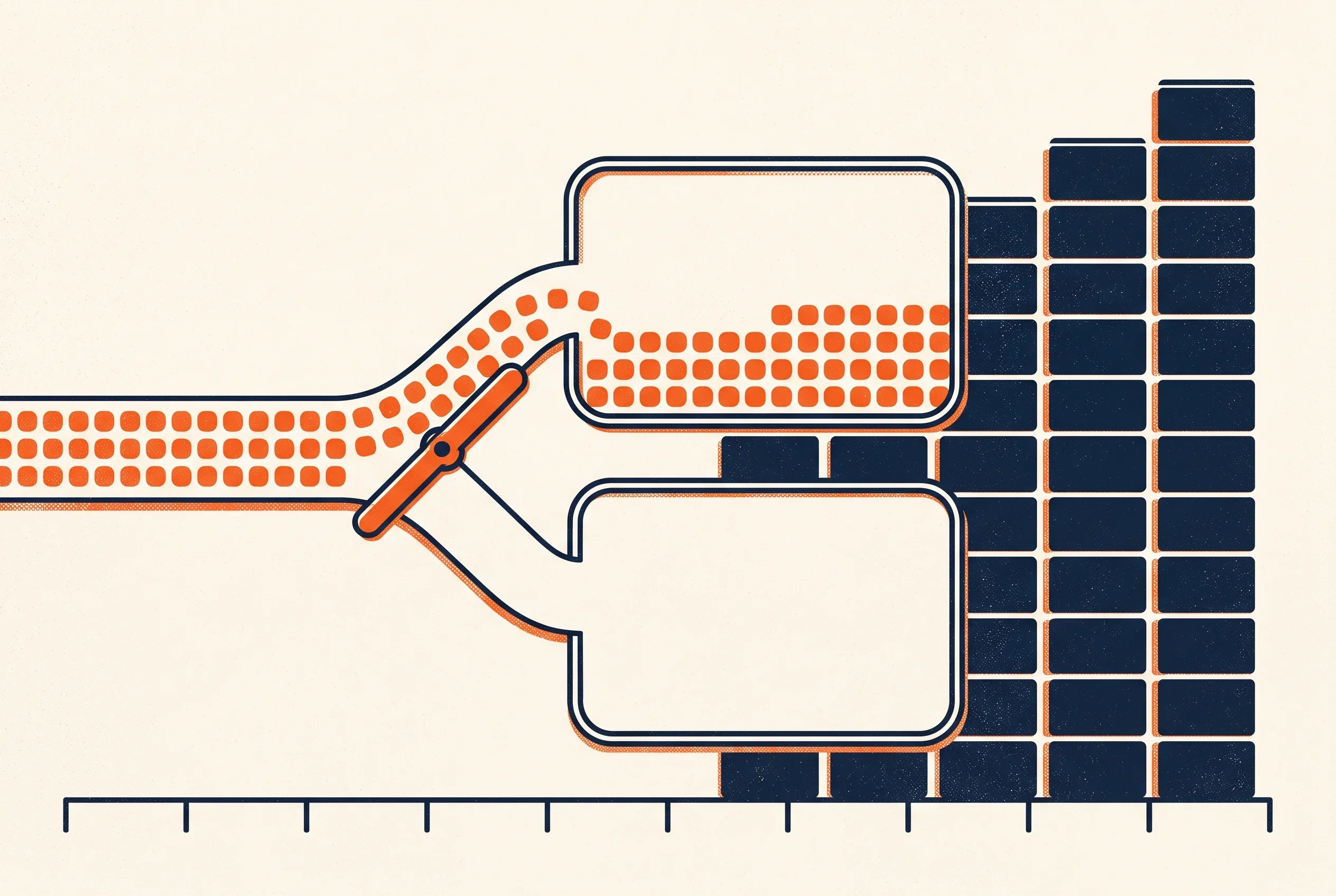
Regional Endpoints, now generally available, let customers choose whether their inference runs in Europe or the US 1. That shifts where the question lives: a condition that is usually settled in contract terms becomes something you select at the API level.
The Priority Tier provides committed service levels for mission-critical workloads, including custom rate limits, and is backed by an uptime SLA 1. It is in public preview.
Putting the two together, Mistral positions itself as the only European AI lab to offer both a choice of processing region and a committed, SLA-backed service level 1. That is the company’s own characterization, not a third-party assessment of what other providers offer.
Widen the model choice, not the footprint
The other product announcement is third-party open models hosted on Mistral’s own platform. The first is Z.ai’s GLM-5.2, and Mistral says this and future open models will run on the same infrastructure, regional controls, and service commitments as Mistral models 1.
According to Mistral’s documentation, GLM-5.2 is a third-party open source text model from Z.ai, hosted by Mistral for long-context coding and agentic workflows 2. The documentation also states that the model is served without Mistral modifications 2. It has a 1 million token context window with a maximum output of 128k tokens, is in public preview, and is priced at €1.19 per million input tokens, €0.119 per million cached input tokens, and €3.74 per million output tokens 2.
The design intent reads as widening model choice without fragmenting where the AI runs. Region-selectable endpoints and an SLA form the base layer, and both Mistral’s own models and third-party open models sit on top under the same terms. How to treat open-weight models is a question vendors answer differently: Anthropic has published a position stating it has never advocated banning open-weight models, narrowing its regulatory proposals to three points. Mistral’s choice here is to carry models it did not build, as long as they run under its operating conditions.
Turning customer commitments into infrastructure
The third piece, ECUs, is about the infrastructure side. Mistral says European Compute Units, or ECUs, convert those commitments into access to Mistral-built infrastructure over multiple years 1. Customers make multi-year commitments that support European infrastructure; Mistral builds regional infrastructure and provides access to capacity across Mistral Compute products as customer needs evolve 1.
On capacity, the company says it has plans to build up to 1 GW of capacity by 2030 1 — a plan with an upper bound, not capacity in operation.
Named participants include Amadeus, ASML, Capgemini, Caisse des Dépôts, and CMA CGM, each with a quote from its chief executive 1. ASML CEO Christophe Fouquet says few industrial endeavors will matter more to Europe’s next generation than building the capacity to develop and run AI on its own terms 1. Caisse des Dépôts CEO Olivier Sichel says that with Mistral Compute, Europe now has a neocloud capable of competing on a global scale 1. CMA CGM Chairman and CEO Rodolphe Saadé says deployment is already under way among thousands of employees and across geographies 1. These are participants’ own assessments rather than measured outcomes.
Regulation keeps reshaping product specs
The timing sits in a stretch where regulation and product specification keep converging. Article 50 transparency obligations under the EU AI Act have applied since August 2, 2026, preceded by the European Commission’s code of practice on marking and labelling AI-generated content published on June 10. On the transparency side, Anthropic — a signatory — has published how it will mark content Claude generates. Mistral’s announcement answers a different axis of the same regulatory environment: not how content is labelled, but where processing and infrastructure sit.
Mistral has also been filling in the surrounding pieces, releasing the Shieldstral safety classifier in early August. The push to hold models and infrastructure regionally is not limited to Europe either — in South Korea, LG released K-EXAONE 2.0 as open weights.
The practical takeaway for organizations outside Europe is that “where inference runs” is now surfaced as an API-level choice. For projects with a processing-location requirement, something previously confirmed provider by provider becomes a selection. That said, the destinations named in this announcement are Europe and the US, with no mention of anywhere else 1. Where the requirement runs to a specific country, this announcement alone does not cover it.
Given that the Priority Tier and GLM-5.2 are both in public preview, what is settled today is the general availability of Regional Endpoints and the existence of the ECU framework. How much of that 1 GW materializes, and when, will have to be read against later announcements.
Sources
- In-region inference, open models, and new European infrastructure for sovereign AI - Mistral official blog (August 11, 2026)
- Z.ai GLM 5.2 - Mistral official documentation
Was this article helpful?
Thank you!
Received. Thank you!