Claude Watermarks Generated Text: What Anthropic's EU AI Act Marking Actually Covers
Anthropic signed the EU AI Act Article 50(2) transparency code and will weave an imperceptible watermark into text Claude generates, plus C2PA-signed provenance metadata on generated files. Models launched in the EU on or after August 2, 2026 are covered, and marking applies worldwide.
Anthropic has published, in a support document, how it will attach machine-readable marks to content Claude generates 1. The company says it has signed the EU AI Act’s Article 50(2) Code of Practice on Transparency of AI-Generated Content, as a provider of both generative AI models and generative AI systems 1. TechCrunch reported on the plan on August 11, 2026 2.
Both text and files are covered. When a supported Claude model generates text, it weaves an imperceptible watermark directly into the text itself 1. When it generates a supported file type such as .svg, .png, or .jpg, it attaches signed provenance metadata following the Coalition for Content Provenance and Authenticity (C2PA) open standard 1.
Embedded in the text, and it survives copy-paste
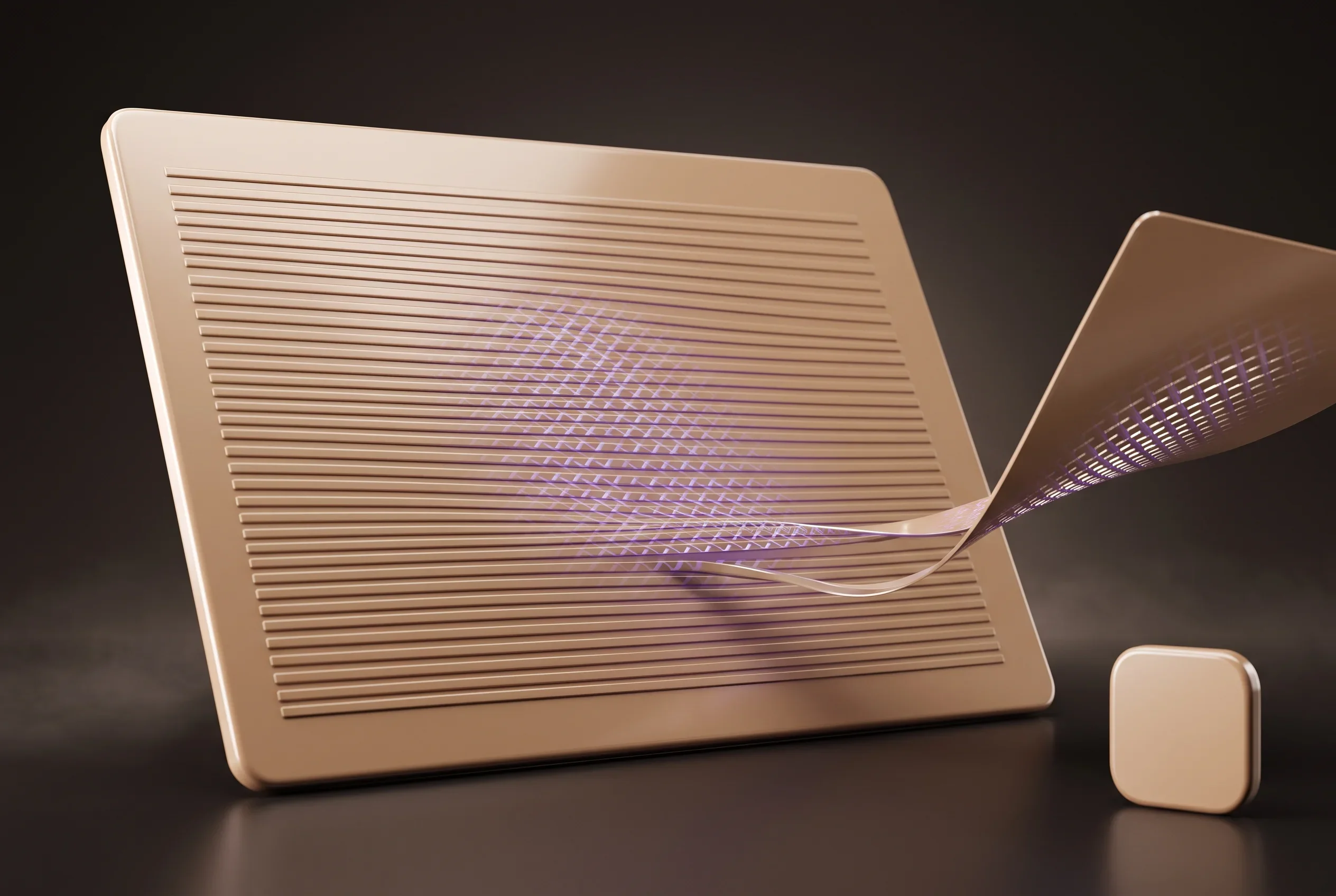
The detail worth noting is that the watermark is embedded as part of the text. Anthropic says that because the watermark is part of the text, it will travel with the text when it is copied and pasted elsewhere, and may persist through some editing 12. It is invisible to a reader and meant to be picked up by machines.
The marking is applied at the model layer. According to Anthropic’s explanation as quoted by TechCrunch, watermarking will be applied at the model level, which means it will be present no matter which Claude product or surface the text comes from 2. The surfaces Anthropic lists are correspondingly broad — Claude Platform (API), Claude, Claude Code, Claude Cowork, and Claude Tag — and include access through AWS, Google Cloud, or Microsoft Foundry 1. Surfaces such as Claude Cowork on mobile and web are not an exception.
The timing condition is that Claude models launched in the EU on or after August 2, 2026 will support machine-readable marking at launch 1. For models launched before that date the law includes a transition period, and Anthropic says it is working to add marking support for those models as well 1. TechCrunch reports that all models released after August 2 will automatically carry the technology to watermark both generated text and files 2.
The geographic scope is not limited either. Anthropic states that marking will apply to output from supported models wherever Claude is offered, worldwide 1. An implementation that began as compliance with an EU rule therefore reaches users outside the EU in the same form.
Neither a hit nor a miss settles the question
Anthropic spells out the limits of the mark in some detail. On a positive detection, the company says a detected mark provides a signal that content was processed by Claude, but is not fully conclusive 1. Because a mark can also appear when Claude edited existing writing, a detection does not mean Claude wrote the passage from scratch.
The reverse does not hold either. Anthropic lists five cases in which content generated by Claude may not carry a detectable mark: it was generated by a model released before marking was supported; the text has been heavily edited, paraphrased, translated, or mixed into other writing; the passage is very short, leaving too little text for a reliable signal; a file’s metadata was stripped through format conversion, re-saving, screenshots, or other means; or it was produced through a platform, feature, or file type where a particular marking type was not supported 1.
How much editing it takes to remove the watermark has not been disclosed. TechCrunch writes that it is not clear how much editing users need to do to remove the watermark, and that it has asked Anthropic to clarify 2.
The tooling on the detection side is not in place yet. Anthropic says it is also working to enable users and other third parties to detect Claude’s embedded watermarks and provenance metadata, with technical documentation to follow 1. The support document itself is framed as describing how the company plans to put its commitments into practice, and support for existing models is described as in progress 1.
Two months from the code of practice to a published approach
This did not arrive in isolation. The European Commission published the final version of its code of practice on marking and labelling AI-generated content on June 10, 2026 — a voluntary framework to help providers and deployers meet the Article 50 transparency obligations that apply from August 2, 2026. TechCrunch describes the EU AI Act’s Transparency Code, which took effect on August 2, as requiring AI companies to mark AI-generated or edited content in a way other systems can identify 2. Anthropic’s announcement is a signatory setting out how it plans to carry that into its products.
Parallel moves are visible in audio and images. AI music generator Suno said on August 6, 2026 that it had begun work on a transparency tool for identifying Suno-made tracks on other services, and set out its plans for audio watermarking. In Anthropic’s own approach, files rely on the existing C2PA signed-metadata standard while text uses a different method that embeds the mark in the prose itself 1. The weakness of the metadata route is one Anthropic names directly: format conversion, re-saving, or screenshots can strip a file’s metadata and leave nothing to detect 1. Embedding directly in the text appears designed to avoid that fragility.
What this changes in day-to-day use
For organizations using generative AI internally, the practical implications run in two directions.
One is that deliverables will carry a detectable mark. If text drafted in Claude can reach the outside world through a plain copy-paste, text generated by a supported model will carry the mark. Where there is no settled policy on disclosing AI involvement — in deliverables, proposals, or published articles — deciding that policy first makes the situation easier to manage. That said, as above, the presence or absence of a mark does not by itself establish whether AI wrote something, so using a detection to confront an individual would not square with Anthropic’s own description of the signal.
The other is the receiving end. There are situations where you would want to check mechanically whether a document from a supplier or an applicant was AI-generated, but with no detection tool published, that is not currently possible. Even once one ships, a non-detection cannot be treated as proof that AI was not used — the five exceptions Anthropic lists make that clear.
Seen from the regulatory side, this is a case of an EU obligation reshaping product behavior beyond the EU. Similar things are happening elsewhere: Australia has announced a national framework, the Australian Standards for AI, and on the enterprise side, mechanisms such as inference hooks for Claude Enterprise let organizations insert their own inspection layer. Marking the output is the model provider’s responsibility; controlling what leaves the organization is the customer’s, and the two are designed separately. Keeping clear which layer you manage makes it easier to trace the blast radius when the rules change again.
Anthropic’s support document is written on the assumption that all three of the supported models, supported file types, and detection methods will be updated over time. Exactly which formats will become verifiable depends on the technical documentation the company has said is coming.
Sources
- How Claude marks AI-generated content - Anthropic official support document
- Anthropic says it will watermark text generated by its AI models - TechCrunch (August 11, 2026)
Was this article helpful?
Thank you!
Received. Thank you!