27% of Enterprises Ban ChatGPT Usage - The Frontline of AI Security Risks and Countermeasures
Cisco survey reveals enterprise GenAI ban reality. Detailed analysis of Samsung data leak incident, major companies' responses like JP Morgan and Amazon, and the rapid expansion of local AI deployment.
27% of Enterprises Ban ChatGPT Usage - The Frontline of AI Security Risks and Countermeasures
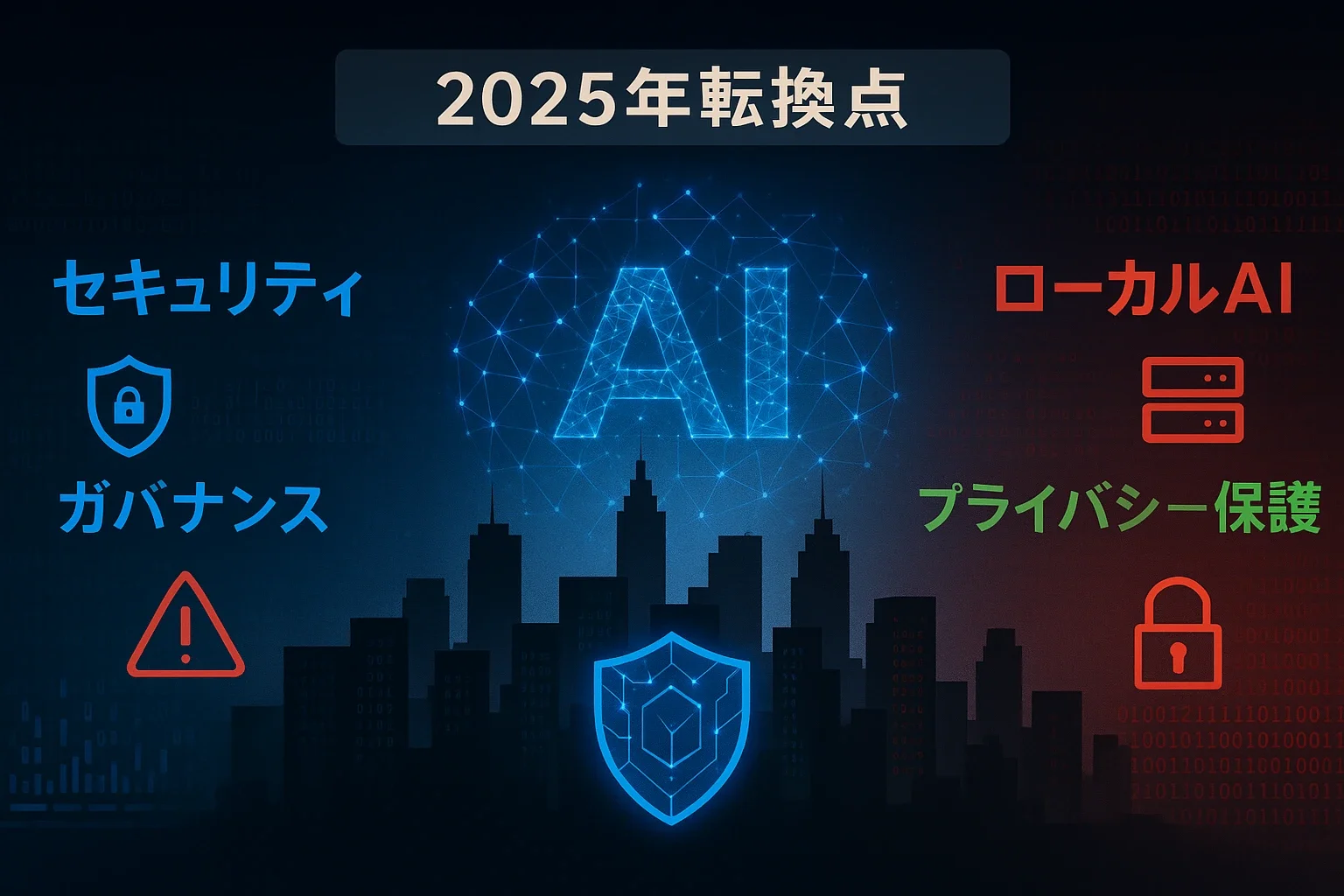
In 2025, as enterprise AI adoption rapidly advances, shocking survey results have emerged. According to the Cisco 2024 Data Privacy Benchmark Study, over 27% of enterprises have banned the use of GenAI (generative AI)1. Major companies including JPMorgan Chase, Amazon, Bank of America, and Samsung have successively announced ChatGPT usage restrictions. Notably, Samsung experienced three confidential information leaks in just one month, sending shockwaves through the industry. This situation highlights the serious dilemma that exists between AI utilization and enterprise security.
Major Companies Successively Ban ChatGPT Usage
The Samsung Incident’s Industry Impact
In 2024, the confidential information leak incident at Samsung sounded an alarm for enterprise AI usage. The company experienced three confidential data leaks in just one month:
- Source code leak
- Internal meeting minutes exposure
- Hardware-related data breach
Following this incident, Samsung temporarily banned all use of generative AI tools. The company is currently developing its own AI tools.
Financial and IT Giants’ Response Status
JPMorgan Chase restricted access to ChatGPT citing compliance issues. Amazon similarly restricted employee usage. Other companies implementing usage restrictions include:
- Bank of America
- Citigroup
- Deutsche Bank
- Goldman Sachs
- Wells Fargo
- Verizon (blocking workplace access)
These companies are taking strict restrictive measures from the perspectives of confidential information leak risks and regulatory compliance.
Five Security Risks ChatGPT Brings to Enterprises
1. Information Leakage to Training Data
The most serious risk is the possibility that user input data may be used for future model training. For example, if an executive copies and pastes corporate strategy documents into ChatGPT for creating internal presentation slides, that information could potentially be reflected in future responses to other users, including competitors.
2. Data Persistence and Privacy
In the public version of ChatGPT, user inputs are stored and utilized as training data. Many users are unaware of this fact and unconsciously share confidential information.
3. Difficulty in Regulatory Compliance
Italy’s data protection authority temporarily banned ChatGPT due to GDPR violations. Major concerns:
- Lack of age verification mechanisms
- Mass collection of personal data
- Unauthorized use for AI training
4. PII (Personally Identifiable Information) Exposure
ChatGPT may inadvertently generate information containing PII or intellectual property in its responses.
5. Inter-Agent Communication Risks
In the 2025 enterprise environment, AI agents communicate with each other and automatically transfer data. This complex interconnection makes data security management more difficult.
Rapid Expansion of Local AI Adoption - Major Trends in 2025
Rise of Latest Open-Source LLMs
Responding to enterprise security concerns, locally executable LLMs are rapidly evolving:
Llama 3.3: Meta’s latest model. Achieving high performance with 70B parameters Phi-4: Developed by Microsoft. Despite only 2.7B parameters, outperforms 70B-class Llama-2 Gemma 3: Google’s user-friendly lightweight model DeepSeek-R1: Emerging model achieving high performance at low computational cost Mistral Small 3.1: Efficient model specialized for code generation
Benefits of Local Execution
- Complete Data Privacy: All processing completed within company servers
- Regulatory Compliance: Full compliance with data protection regulations like GDPR
- Cost Reduction: Reduced API fees and elimination of network latency
- Customizability: Fine-tuning possible with company data
Tools Facilitating Deployment
Ollama: Integrates LLM download, management, and execution. Can operate in air-gapped environments3 LM Studio: Easy execution of Hugging Face models via desktop app LocalAI: Supports large-scale deployment in Kubernetes environments
Gartner predicts that by 2027, half of the GenAI models used by enterprises will be industry-specific.
2025 AI Governance Framework
Essential Implementation Elements
According to the latest reports from IBM and Splunk, effective AI governance requires:
-
Multi-layered Responsibility Structure
- CEO/Executive: Ultimate responsibility
- Legal Department: Ensuring compliance
- IT Department: Technical implementation
- Business Units: Practical application
-
Clear Policy Documents
- Definition of permissible business scope
- Data classification and handling standards
- Explicit prohibition clauses
- Violation response procedures
-
Continuous Monitoring
- Visualization of AI usage
- Early risk detection
- Rapid response to regulatory changes
Preparation for EU AI Act
The EU AI Act, which will be implemented in phases from February 2025, will significantly impact Japanese companies. Key requirements:
- Adoption of risk-based approach
- Ensuring transparency
- Mandatory human oversight
- Strengthening data governance
Enterprise Solutions
OpenAI’s Enterprise Options
To address security concerns, OpenAI offers:
ChatGPT Enterprise:
- No training on business data
- Guaranteed ownership of input/output data
- Control over data retention period
- SAML SSO authentication
- Granular access control
Important Difference: Unlike the public ChatGPT, the Enterprise version does not use user data for model training2.
Realistic Hardware Requirements
Recommended specifications for local LLM execution:
- GPU: NVIDIA RTX 4090 or higher, or AMD equivalent
- RAM: Minimum 64GB (128GB recommended for large models)
- Storage: High-speed SSD 1TB or more
Even for SMEs, these requirements are becoming within realistic cost ranges.
Practical Deployment Strategy
Recommended Phased Approach
-
Pilot Phase (1-3 months)
- Validation with non-confidential data
- Security assessment
- ROI measurement
-
Limited Deployment (3-6 months)
- Full-scale introduction in specific departments
- Policy adjustments
- Employee training
-
Company-wide Deployment (6 months onwards)
- Establishment of governance structure
- Continuous improvement process
Use Cases in AEC Industry
In the Architecture, Engineering, and Construction (AEC) industry, local AI enables:
- Automated review of project documents
- Site report generation
- Contract drafting
All executable while protecting confidential information without risk of NDA violations.
Future Outlook: Predictions for Late 2025
Rise of Domain-Specific AI
Gartner predicts that by 2027, half of GenAI models used by enterprises will be specialized for specific industries and operations. These models will primarily be deployed on-premises or in private clouds, allowing enterprises to fully control data flow.
Rapid Changes in Regulatory Environment
2025 marks a regulatory turning point:
- EU AI Act: Phased implementation from February
- US AI Bill of Rights: Strengthened federal-level regulation
- China AI Regulation: Establishment of unique regulatory framework
Enterprises need to build AI governance processes immediately and set standards that exceed regulations.
Key Lessons and Action Items
Three Emergency Measures Enterprises Should Take
-
Immediate Risk Assessment
- Inventory current AI usage
- Identify data leak risks
- Survey employee ChatGPT usage patterns
-
Establish Interim Policies
- Clarify definition of confidential data
- List permitted/prohibited tools
- Establish violation response procedures
-
Validate Alternative Solutions
- Conduct local LLM POC
- Analyze cost-effectiveness of enterprise versions
- Document security requirements
Business Impact
Real Examples of Cost Reduction
Companies using Ollama have improved data management while significantly reducing cloud costs. In addition to reduced API fees, productivity has improved through elimination of network latency.
New Definition of Competitive Advantage
AI governance creates value beyond mere compliance:
- Improved AI adoption rates
- Enhanced business outcomes
- Trust building through transparency
- Optimized resource allocation
Enterprises now stand at a crossroads balancing AI innovation with security. Whether to completely ban, transition to local AI, or invest in enterprise versions - the choice varies by company, but one thing is certain: remaining without a strategy means facing risks of serious data breaches, reputational damage, and penalties from regulatory violations.
References
- More than 1 in 4 Organizations Banned Use of GenAI Over Privacy and Data Security Risks - Cisco Official Announcement (2024 Data Privacy Benchmark Study)
- Enterprise privacy - OpenAI Official (Enterprise Version Security Specifications)
- Get up and running with Llama 3.3, DeepSeek-R1, Phi-4, Gemma 3 - Ollama Official GitHub (Local LLM Execution Tool)
Was this article helpful?
Thank you!
Received. Thank you!