Cursor Origin: Code Hosting Now in Early Beta on All Paid Plans
Cursor launched Origin, its own code hosting, in early beta on August 17, 2026. You can host new repos in Cursor or sync existing GitHub repos — but for synced repos, pushes still go to GitHub, which stays the source of truth.
Cursor, the AI coding tool, released a code hosting feature called Origin on August 17, 2026. The changelog opens with a single line — “Cursor can now host your code” — marking the point at which a company that has been shipping an editor and agents also takes on the job of storing the code itself1.
Origin is rolling out in early beta, starting the same day, across all paid plans. Cursor describes the audience as “all paid plan users starting today, except enterprise orgs whose admins opt out”1. The initial scope is four things — repos, pull requests, code browsing, and GitHub sync — which Cursor frames as “the essentials, designed for agent scale,” adding that “agent-native features ship soon”1.
Two ways in: host it, or sync it
There are two paths into Origin. The first is creating a new repo on Cursor’s side. In the new Codebase tab, clicking “+New” and naming the repo brings up a page with CLI installation instructions and commands for cloning a repo or pushing a local project. Once you push, the code is hosted on Origin1. When you create your first repo you also name your “codebase,” and that name becomes part of the URL of every repo — the example Cursor gives is cursor.com/codebase/acme-corp1.
The second path is bringing in the GitHub repos you already use. Connect GitHub, pick your org, and the repos available to sync appear; select one and Cursor pulls it in. You choose what gets synced, and you can disconnect a repo at any time. Anyone with read or write access to a synced repo can view it in Cursor as well1.
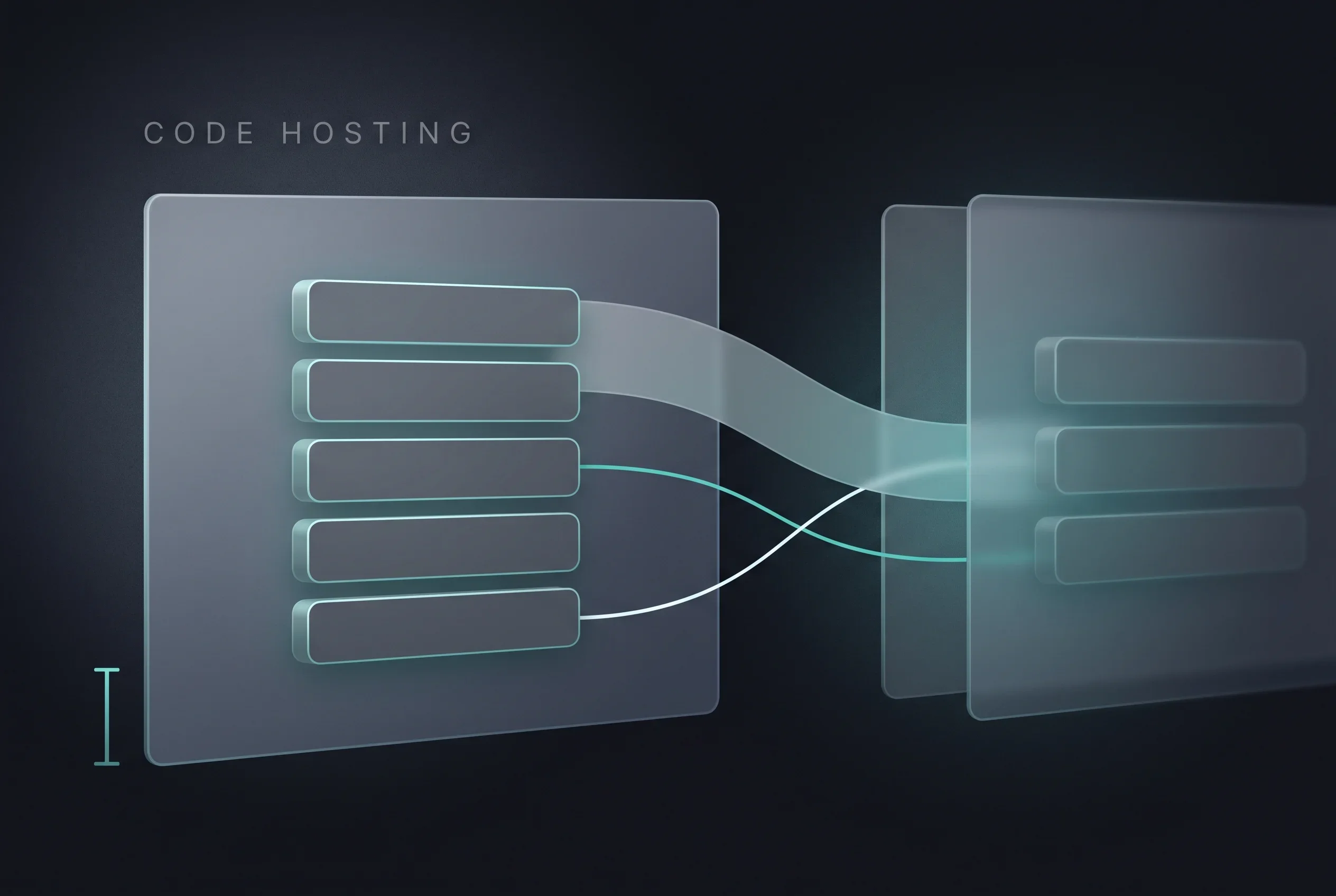
The direction of that sync is the detail worth catching. Cursor’s description is that synced repos update in real time, and the copy in Origin is for browsing, searching, and pulling. Meanwhile, pushes keep going to GitHub, which stays the source of truth for anything started there 1. In other words, this release is not a proposal to pull existing repositories off GitHub. Icons next to each repo name distinguish the ones Cursor hosts from the ones that came in from GitHub1.
Review moves closer to the editor
Every repo gets pull requests. Opening one shows the timeline, commits, checks, and files changed; you can review the diff, leave comments, and merge1.
On synced repos, those pull requests sync both ways. A comment written in Cursor posts to GitHub, and a reaction or reply on GitHub shows up in Cursor within seconds. A review assigned to you on GitHub can be reviewed and merged from Cursor1. With code, PRs, and agents in the same place, you can ask Cursor about the code you are browsing and have it answer, make changes, update PRs, or push a branch — which is the point Cursor makes about the arrangement1.
Cursor had just introduced Builds for Cloud Agents on August 13, letting agents boot from a prepared environment (Cursor Adds Builds to Cloud Agents). Setting up where agents run, then providing a home for the code and reviews those agents touch, lines up in that order. As a company, Cursor also announced on August 14 that SpaceX’s acquisition had closed (SpaceX Closes Cursor Acquisition).
CI and deploys can carry existing setups over
Around Origin sits a framework of “apps” for connecting outside services. Integrations with Vercel, Depot, and Buildkite are available now, with more said to be coming1.
Connect Vercel from a repo’s Apps tab and every PR gets a preview deployment where you can test and comment; merge and it ships to production1. For CI, you connect Depot or Buildkite. The practical detail here is that both run your existing GitHub Actions workflows1, and Buildkite also runs its native pipelines1. That means trying Origin does not require rewriting CI definitions.
Agent Plugins 1.0, the shared packaging format GitHub made generally available on August 12, likewise centered on reusing the same package across supporting clients. Putting GitHub sync and GitHub Actions compatibility up front in Origin reads as a design shaped by the same reality: whether existing assets carry over tends to decide how hard a switch is.
What can and cannot be decided yet
What the changelog establishes is the shape of the features and who gets them. There is no pricing information on the page. All it says is that Origin is rolling out to all paid plans; storage limits and the treatment of free plans are not stated1. The “agent-native features” said to be shipping soon are likewise undescribed, with no timing given1.
So the decision actually on the table right now is not the large one about where a codebase should live. It is smaller: whether to put a new repo on Origin, or to sync an existing GitHub repo and move only browsing and review into Cursor. In the sync case, both the push target and the source of truth remain GitHub, so the cost of trying it is relatively low. Moving a team’s workflow onto Origin-hosted repos, on the other hand, is early while pricing is unstated.
At this beta stage, the thing that can realistically be evaluated is narrower: whether pulling the review path closer to the editor actually reduces rework. Since the design lets you try it without rewriting existing CI, that judgment can wait until after hands-on use.
The official documentation linked from the changelog is at cursor.com/docs/origin2.
Sources
- Origin Code Hosting - Cursor official changelog (August 17, 2026)
- Origin - Cursor Docs - Cursor official documentation
Was this article helpful?
Thank you!
Received. Thank you!