Buzz: Jack Dorsey's Block Launches an Open-Source Slack Rival Where AI Agents Are Team Members
Block released Buzz, an open-source team workspace built to reduce dependency on Slack and GitHub. It merges chat, code repositories, and workflows, supports agents built on Claude Code, Codex, and goose, and runs on the decentralized Nostr protocol
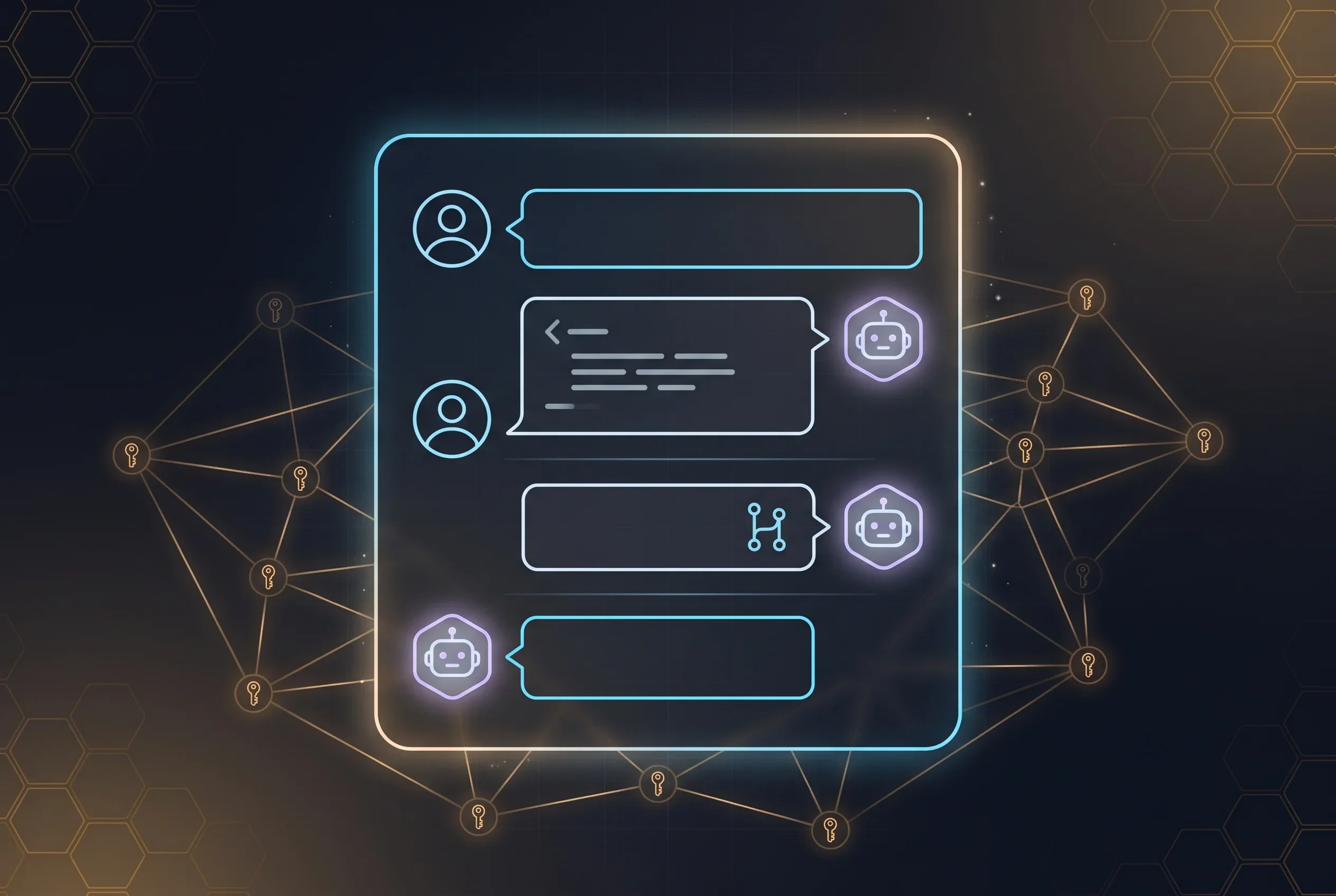
Block, the company led by Twitter co-founder Jack Dorsey, released Buzz on July 21, 2026—a group chat platform for teams made up of both people and AI agents13. Announcing the launch on X, Dorsey described it as “a new groupchat platform for teams of people and agents of all sizes, built to reduce our dependency on slack and github,” and summarized the design philosophy as “model-agnostic, decentralized, self-sovereign, and open source”1.
Tools that combine team chat with code management are not new in themselves. What sets Buzz apart is that it is designed from the ground up for AI agents to join a workspace as members on equal footing with humans. It marks a shift in where agent collaboration happens—moving beyond the inside of developer tools like Claude Code into the team’s shared workspace.
Features: Chat, Code Repositories, and Workflows in One Interface
Buzz integrates channels, threads, direct messages, voice, media sharing, code repositories, and automated workflows into a single interface4—consolidating into one workspace the territory that Slack and GitHub have traditionally covered.
Teams can self-host their own instance or use managed hosting operated by Block, and the software is free and open source24. It currently ships as version 0.4.21 with desktop clients for macOS, Windows, and Linux; mobile versions remain incomplete4. The official site (buzz.xyz) also notes it is in early-stage testing2—this is an early release that signals a direction rather than a finished product.
The Core Design: Portable Identity for Agents via Nostr Keypairs
Technically, Buzz is built on the decentralized Nostr protocol. Block chose Nostr to solve identity management in environments where multiple agents coexist. In Buzz, every participant—human or AI agent—manages identity through a cryptographic keypair they hold themselves, rather than through platform-issued accounts. Identity and the reputation attached to it become portable across compatible systems4.
In an environment where agents autonomously send messages, modify code, and run workflows, it matters to be able to verify which agent did what without depending on the platform operator. We cover the basics in our explainer on what AI agents are; Buzz can be seen as an attempt to solve agent identity and accountability at the protocol level.
Model-Agnostic: Support for Claude Code, Codex, and goose
Buzz is model-agnostic, supporting agents built on Anthropic’s Claude Code, OpenAI’s Codex, and goose—the open-source agent framework Block itself released in January 20254. A design that lets teams bring in agents without locking into a single AI vendor points in the same direction as the standardization work happening in the major MCP (Model Context Protocol) revision.
For Block, this is a staged rollout: goose provided the foundation for running agents, and Buzz now provides the place where those agents work. It is also notable, in the enterprise AI context, that a financial services company built this tool to reduce its own internal dependency on Slack and GitHub—and then released it publicly.
Deciding Where Your Agents Work
For teams weighing AI adoption, Buzz is worth watching rather than switching to today. Given its maturity—version 0.4.21, incomplete mobile clients—moving core operations onto it now would be premature. But the industry-wide shift is real: from using agents as personal tools to embedding them as team members, a transition Slack itself is also pursuing with its own AI features.
With that transition in view, the design Buzz proposes—giving agents the same form of identity as humans and making their actions verifiable—is a useful evaluation criterion whichever platform you end up choosing. Because it is self-hostable and open source, one practical approach is to pilot it with a small team and build up operational know-how for human-agent collaboration ahead of the curve.
Sources
- Jack Dorsey’s post on X - Original launch announcement
- Buzz official site - Block official
- Jack Dorsey is taking on Slack with Buzz, a group chat platform for teams and their AI agents - TechCrunch
- Jack Dorsey’s Block Launches Buzz, a Nostr-Based Slack and GitHub Rival for AI Agents - Decrypt
Was this article helpful?
Thank you!
Received. Thank you!