OpenAI Automatically Places Under-18 Users in ChatGPT for Teens - Protections On by Default
OpenAI introduced ChatGPT for Teens on August 18, 2026. Users are automatically placed into it if the system estimates they are under 18 or they state their age is between 13 and 17. Study Mode anchors the learning side, and an updated under-18 model spec that bars romantic language and emotional dependence applies by default.
On August 18, 2026, OpenAI introduced ChatGPT for Teens 1. The company describes it as an experience designed to help teens learn, think critically, deepen understanding, and use AI with confidence, providing stronger built-in safety protections, features to promote healthy use, and additional controls for parents 1.
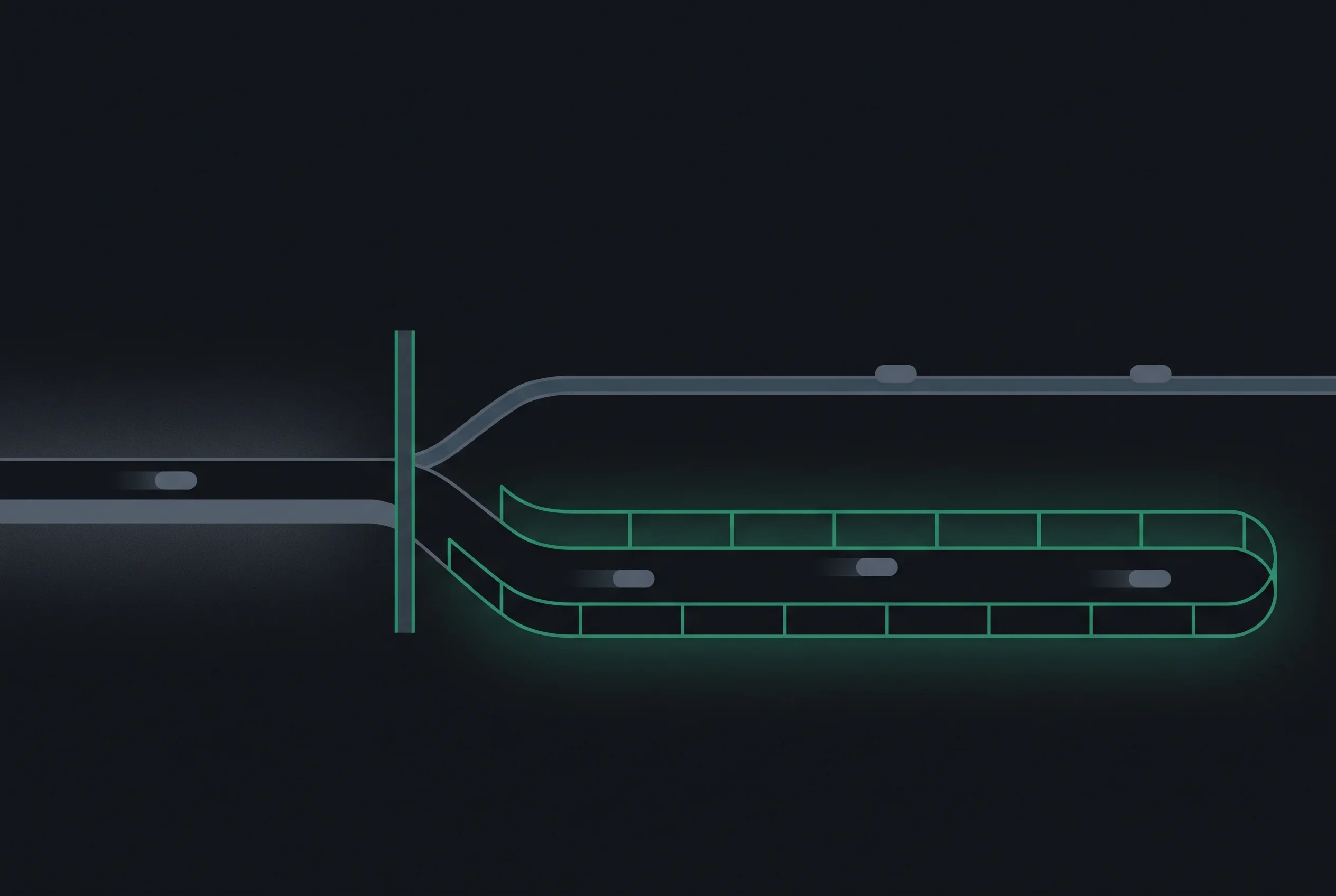
The first thing to note is that this is not something a user opts into. If OpenAI’s system estimates someone is under 18, or they state their age is between 13 and 17, they are automatically placed into ChatGPT for Teens 1. It is implemented as routing at the entrance, not a toggle in settings.
A Separate Experience Built on Earlier Work
OpenAI positions this launch as building on a series of earlier steps: introducing Parental Controls, updating its Under-18 Model Spec, creating its Teen Safety Blueprint, rolling out Age-Prediction, and expanding features to support learning and healthy AI use for teens 1.
Across that work, the company writes, it has been guided by four commitments — put teen safety first, encourage real-world support, treat teens like teens, and be transparent about how its systems should behave 1. What changes here is that instead of adding features, OpenAI has carved out a single coherent experience for under-18 users.
The Learning Side: No Shortcuts Handed Over
Four learning components are listed 1.
Study Mode uses guiding questions and step-by-step support to help teens understand the material. New responsible homework reminders can recognize when a teen appears to be trying to shortcut an assignment and redirect them toward Study Mode for step-by-step collaborative problem solving 1. Quizzes and Learning Visualizations give teens more ways to practice, test what they know, and see difficult concepts more clearly 1. And with new Study Hours, teens or parents can choose times when Study Mode is on by default 1.
Study Mode itself was built with teachers, scientists, and pedagogy experts, drawing on longstanding research in learning science. It uses guiding questions, scaffolding, metacognitive prompts, and knowledge checks to help students work through problems step by step instead of simply receiving a solution 1.
The wording on effectiveness is careful, and worth quoting as-is. The design is described as consistent with broader research showing that active retrieval and self-explanation can support stronger comprehension and longer-term retention than passive review alone, and OpenAI’s own early evaluation is said to have shown promising gains in student performance 1. It is not written as a proven learning outcome.
The split between inside and outside the classroom is explicit too. ChatGPT for Teens is designed to support learning outside of the classroom, while ChatGPT for Teachers continues to provide educators and school districts with secure, institution-managed access 1. Alongside this, OpenAI and CodeAI announced a signature partnership focused on the education that surrounds the technology — helping teens understand how AI works, direct it, question it, and create with it 1. CodeAI CEO Karim Meghji’s comment runs along the lines that every student should know how AI actually works and be able to question it, catch its mistakes, and know when to stop trusting it 1.
The Protection Side: Model Spec, and How Much Parents Are Told
For users under 18, age-appropriate safeguards apply. They are designed to reduce exposure to content that may be harmful or developmentally inappropriate, while preserving the ability to learn, create, and explore 1.
The basis is the Under-18 Principles in OpenAI’s Model Spec, informed by developmental science and guidance from experts. In practice, that means age-appropriate model protections and product interventions in higher-risk areas such as self-harm, violence, eating disorders, dangerous activities, and explicit sexual or graphic content 1.
The updated under-18 model spec is specific about scope. Going beyond blocking romantic or sexualized roleplay, it states that ChatGPT should not use romantic language, encourage emotional dependence, or imply that it has feelings or consciousness 1. The stated purpose is to reinforce healthy, real-world relationships 1. Related to that, break reminders encourage teens to step away, and product cues consistently identify ChatGPT as AI 1.
On the parental side, what stands out is how narrowly the information flow is drawn. Parents with linked teen accounts can set Quiet Hours, manage selected settings, and receive safety notifications in limited high-risk situations 1. OpenAI is adding notifications related to eating disorders while limiting what is shared and focusing on moments when offline support may matter most 1. This is not a design that surfaces every conversation to a parent.
Other additions include sensitive-image upload reminders cautioning teens against sharing private or sensitive images, teen-specific onboarding that introduces the learning and safety features from the start, and customization options such as accent colors and voice variations — with the caveat that these help the experience feel personal without blurring the line between a useful tool and a human relationship 1.
Some of the evaluation work is being published as well. OpenAI has added new under-18 evaluations to its system cards, showing how its models perform against teen-specific standards in challenging sensitive-content cases across areas such as self-harm, eating disorders, violence, age-restricted goods and services, and sexual content 1.
Reading It as a Product Shipped to the General Public
Read only through a parent’s lens, this announcement is half-used. The other half is as an implementation example for anyone operating an AI product that anyone can touch.
Three things stand out. First, routing happens at the entrance, combining age prediction rather than relying on self-declaration alone. Second, protections are on by default rather than opt-in. Third, parental notifications are confined to “limited high-risk situations” with the shared content explicitly limited — a line drawn deliberately in the source text to avoid landing on a surveillance tool 1.
That third point is worth thinking about even when distributing AI tools internally. Designing who can see what affects both safety and trust.
The transparency angle also connects to a running thread. Product cues that consistently identify ChatGPT as AI point in the same direction as Claude adding an invisible watermark to generated text to meet EU AI Act transparency obligations. One signals who you are talking to and the other signals where an output came from, but both are implementations of making it clear that AI is involved.
There is a scale dimension too. As the Gemini app reached one billion monthly users, general-purpose chat is already used at a scale that does not select for age. Splitting the experience by age is arguably starting to be treated as a premise rather than a feature.
The pairing with the company’s disclosure the same day that it slowed the pace of development itself is a coincidence of timing, but a telling contrast. One is a safeguard inside development; the other is a safeguard at an exit touched by hundreds of millions of people.
Availability dates, regions, and eligible plans are not stated in the announcement. OpenAI says it will continue to build additional features and to measure and publish what it is learning 1.
Sources
- Introducing ChatGPT for Teens: Built for learning, backed by protections - OpenAI (August 18, 2026)
Was this article helpful?
Thank you!
Received. Thank you!