The Models People Talk About Aren't the Ones They Use: Hugging Face's 2026 Hub Data
Hugging Face published its analysis of Hub activity from January to August 2026. Exactly one repository appears in both the download top 25 and the likes top 25, models under 1B take 83% of all downloads, and the lead in agent traffic changes month to month.
On August 14, 2026, the Hugging Face blog published an analysis titled “State of Open Models: Summer 2026 Observations”1. Written by the company’s Adina Yakefu, Apolinário and Irene Solaiman, it covers activity observed on the Hugging Face Hub from January to August 20261.
One caveat up front. These are statistics from a single platform. The authors note at the end that the metrics used “should not be interpreted as direct measures of model quality, commercial adoption, or overall market share,” and that downloads indicate usage within the Hub ecosystem while missing API usage, private deployments, and distribution through other channels1. Even so, public data at this granularity is scarce, and it is useful for checking the assumptions behind model selection.
Only one repository appears in both top 25 lists
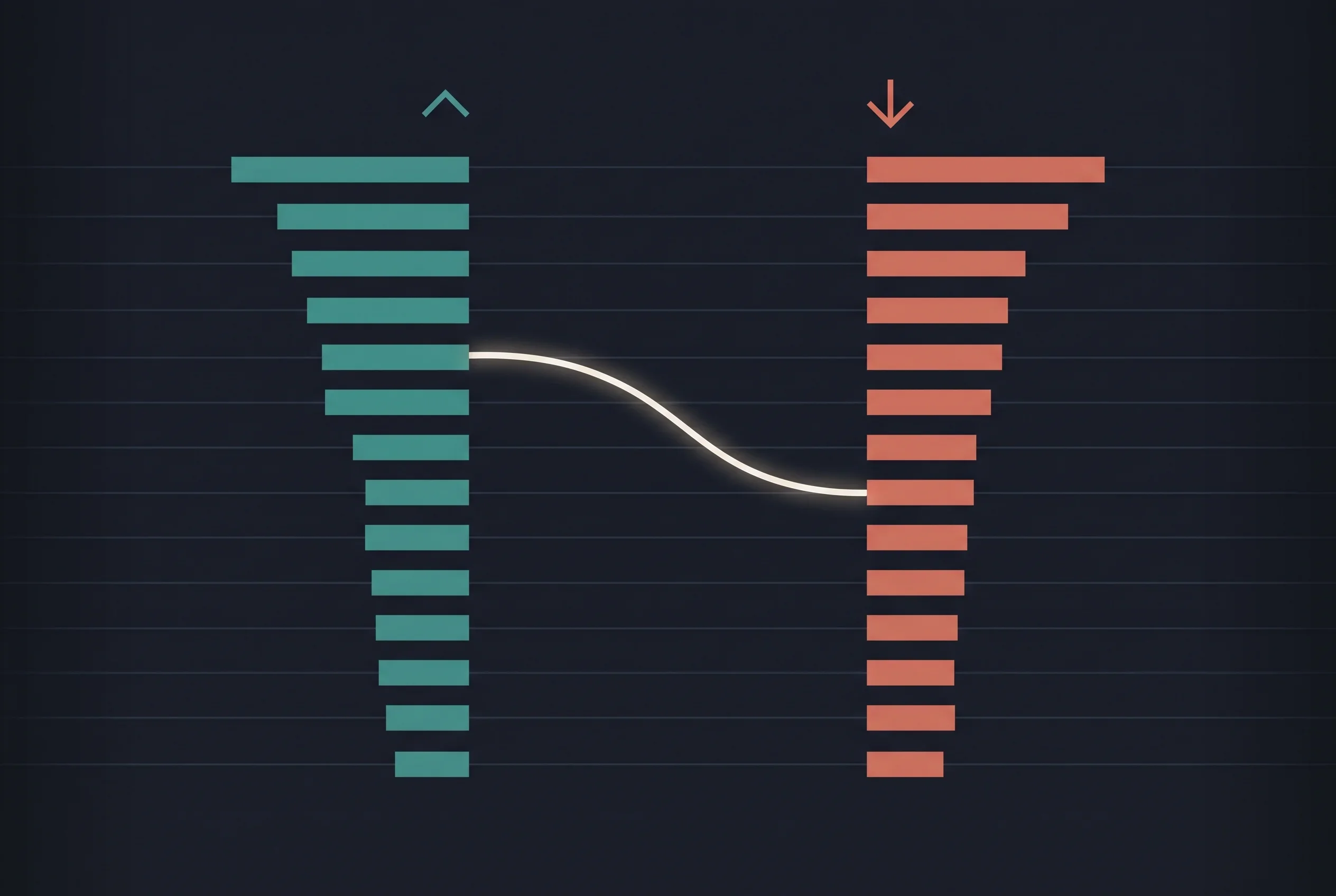
The finding with the most direct bearing on practice is that attention and actual use are separate things.
Hugging Face compared the top 25 repositories by downloads accumulated this year against the top 25 by likes. Exactly one repository appeared in both1. Further, no model published in 2026 reaches the download top 25 at all, and thirteen of the twenty-five date from 20221.
The example given is all-MiniLM-L6-v2, pulled 1.55 billion times in seven months against 5,156 likes1. Kimi-K3 runs the other way, pulled roughly 60 times per like it received1.
Hugging Face frames this as “two numbers record different acts.” A like says a release matters and goes to frontier models in the weeks after they ship; a download says something is wired into a pipeline that runs on a schedule, and accrues to small, stable models over years1. Treating either as a proxy for the other, the authors write, is the most common mistake they see in coverage of the Hub — including their own earlier work1.
The overall distribution is extreme as well. Roughly 85.6% of models have fewer than 200 lifetime downloads, and 1.5% of repositories account for 99.2% of all downloads1. Public model repositories grew from 2.43 million to 2.96 million over the period1, but most of that growth goes unused.
Models under 1B take 83% of downloads; anything above 100B takes 1%
Scale runs counter to intuition too. Among models that declare a parameter count, those under 1B take 83% of all-time downloads, while everything above 100B takes 1%1. Narrowing to 2026 changes nothing: 3% of the volume goes to models above 70B1.
The reason given is blunt — small models “are the only ones that run on the hardware most developers actually have”1. It is tempting to lead with parameter counts and benchmark rankings when picking a model, but the real constraint sits on the hardware side. As covered in our explainer on quantization and distillation, the step of getting a model down to a size you can run is what matters in practice.
That does not mean trillion-parameter models reach no one; the report identifies the route as llama.cpp1. The ggml team joined Hugging Face in February, with the project remaining fully open-source and community-governed1. The July snapshot carries GGUF builds of DeepSeek-V4-Flash at roughly 284B and Kimi-K3 at roughly 2.8 trillion, and as the report puts it, local inference “used to mean an 8B model on a laptop. It now means a trillion-parameter mixture-of-experts spread across a few consumer machines”1.
The growth of that surrounding layer outpaces the core. Model repositories grew 21.5% over seven months, while repositories declaring the gguf library rose 464%, lerobot 194%, and Apple’s mlx 148% — against 16% for transformers and peft and 21% for diffusers1. Hugging Face’s summary: the layer that decides where a model can physically run is growing three to seven times faster than the modelling core1.
That local-inference route runs largely on Qwen. Qwen’s GGUF downloads run 39.6 million a month, nearly twice Gemma’s 20.8 million and more than five times Llama’s 7.5 million1. Llama-derived GGUF repositories slightly outnumber Qwen’s, yet carry a fifth of the traffic1.
151,448 Qwen derivatives — of which Qwen published 54 GGUF conversions
Qwen’s position gets its own chapter. Qwen-based models account for 151,448 derivatives on the Hub, 2.6× Meta’s total footprint and 4.7× the Llama repositories specifically, with Google following at 82,5061. Derivatives grew at roughly 180–210 new repositories per day across the first seven months of 20261.
Hugging Face is explicit that the community built this position. The 151,448 derivatives are downstream work by other developers, not Qwen’s own releases, and among the 28,531 GGUF conversions of Qwen models on the Hub, Qwen published only 541. Three factors are credited: a consistent release cadence, coverage across model sizes, and Apache 2.0 licensing reducing friction for modification, redistribution and commercial use1.
That third point connects to Qwen3.8’s weight release, which we covered the same day. The 27B shipped under Apache 2.0 while the 2.4-trillion-parameter Max-class model shipped under a custom license whose obligations scale with revenue. For whether derivatives get built, that difference is not a small one.
There is data on licensing trends generally. Of 178 Chinese releases above 20B parameters this year, 59% carry Apache 2.0 and 22% carry MIT, with none carrying a non-commercial restriction1. On the American side of the same size band, 29% is Apache or MIT, 41% sits under custom terms, and 30% declares nothing at all1. That “none” figure has drawn a reader objection in the article’s comments, however: Kimi models cannot be served by companies making more than $20M a year without explicit authorization from Moonshot, so the count is disputed1. Worth holding as a case where the granularity of the tally changes the picture.
The lead in agent traffic changes month to month
Closest to the daily reality of using coding tools is the chapter on the agent-usage dataset published in July. It records the agent/<name> token that coding agents send when they call the Hub through huggingface_hub or the hf CLI1.
Claude Code led July at 44.4%. But Hugging Face says that is not the real finding: the same Claude Code held 67.8% in April and 6.4% in May, while Codex climbed steadily from 10.4% to 20.8%1. Their reading is that this is “a market with no incumbent, where one release or one changed default can move half the traffic in a month”1.
The second finding is the size of the unnamed row. Nearly a quarter of agent-tagged traffic in July came from harnesses not yet named in the dataset; in May that figure was 59.8%, and more than a dozen new client identifiers appeared between April and July1. New entrants are arriving faster than any registry can name them.
Worth noting that 44.4% describes access to the Hugging Face Hub specifically, not overall usage share among AI coding tools. Even so, the fact that the work of fetching models and datasets is shifting from people to agents — and that the mix changes month to month rather than quarter to quarter — points at the risk of building internal tooling around one particular harness.
A closed model declined the analysis; a local open model did it
The same chapter carries a short but concrete incident. In July, what appears to be the first documented case of an autonomous agent running a sustained intrusion on its own initiative happened to Hugging Face itself1.
The response is the notable part. When the team tried to analyze the captured attack code with frontier closed models, their safety guardrails declined the work. The analysis was ultimately completed on a quantized open model, GLM-5.2, running on Hugging Face’s own infrastructure1. The company says it published a disclosure and a full technical timeline1.
Legitimate defensive work can be refused by an external closed model — and whether you have something you can run yourself becomes the difference in that moment. As a reason to consider open weights, this sits alongside cost and licensing on the practical end. It also shows a different angle on the same model family than Z.ai’s decision to delay GLM-5.3’s weights pending safety evaluation.
Using these numbers in your own decisions
What this report can realistically change is the order in which you look at things when choosing a model.
Buzz at announcement time and benchmark position tend to be the entry point. What the Hub data shows is that the models used over the long run are small and stable ones, and the reason is that they run on the hardware people have. Starting the evaluation from “can we run it” narrows the candidate list faster.
Growing agent usage points the same direction. The more work you hand to agents, the more calls and time you spend, and cost and speed per call start to dominate. What gets chosen there is not necessarily the top-tier model.
Downloads are not a user count, as Hugging Face itself says up front — bot and CI fetches are included, and API usage was never counted. Still, the shape of the finding, that volume of attention and volume of dependence move independently, is a useful thing to have on hand when proposing a model internally.
Sources
- State of Open Models: Summer 2026 Observations - Hugging Face blog (August 14, 2026; Adina Yakefu, Apolinário, Irene Solaiman)
Was this article helpful?
Thank you!
Received. Thank you!