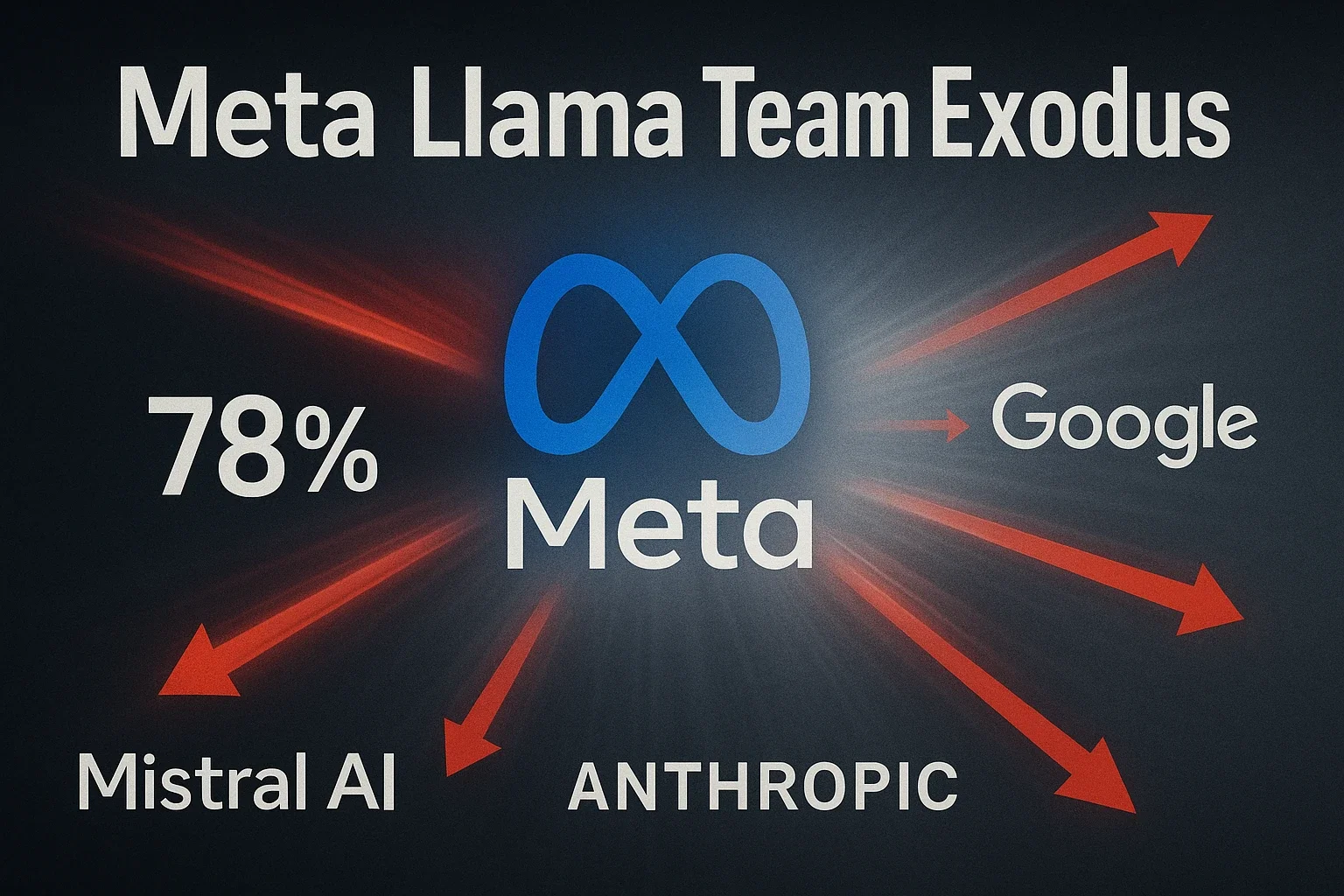
Mass Exodus of Key Llama Team Members at Meta Signals Shift in Development Structure - AI Strategy at a Turning Point
Key members of Meta's Llama project are leaving en masse to establish new AI startups. This could significantly impact Meta's internal AI development structure and strategy.
Mass Exodus of Key Llama Team Members at Meta Signals Shift in Development Structure - AI Strategy at a Turning Point
From April to May 2025, reports of a mass exodus of key engineers and researchers who led Meta’s Llama project have sent shockwaves through the AI industry1. Many of those departing are establishing independent AI startups, potentially significantly impacting Meta’s internal AI development structure and future strategy.
Status of Key Talent Exodus
Five senior researchers and three engineering managers who were core members of the Llama project have successively resigned since April 2025. These individuals played central roles in developing the Llama 3.1 to 3.3 series and were crucial repositories of technical expertise and development know-how.
The main reasons for their departure include constraints on research freedom in AI, increasing commercialization pressure, and desire for independent entrepreneurship. The increasingly complex decision-making process within Meta, making rapid technological development difficult, is cited as a major factor1.
New AI Startup Developments
The departing researchers have co-founded a new AI startup called “Frontier AI Labs.” This company specializes in developing next-generation large language models and has already completed initial funding from multiple venture capital firms.
Frontier AI Labs is pursuing a more flexible and innovative AI development approach based on technical knowledge cultivated at Meta. The company is particularly focused on product development emphasizing enterprise customization features and highly efficient inference processing, with plans to release a beta version in Q4 2025.
Meta’s Response and Organizational Restructuring
In response to the talent exodus, Meta has implemented organizational restructuring of its AI research division. The company is attempting to rebuild its development structure by recruiting senior researchers from outside and promoting internal junior engineers.
Additionally, Meta announced a policy to improve incentive systems for researchers and provide a more flexible research environment. Specific measures include simplifying the research project approval process and expanding individual research time from 20% to 30%.
Impact on the Llama Project
The departure of key members may cause delays in the Llama 4.0 development schedule. Particular challenges have emerged in architecture design and optimization, where transferring accumulated know-how has become problematic.
However, Meta maintains that development will continue without disruption by leveraging its abundant resources and talent pool. The company suggests that the new team structure may actually enable new approaches and technical innovations.
Ripple Effects on the AI Industry
This talent exodus is drawing attention as a symbolic example of intensifying talent competition across the AI industry. The number of AI researchers becoming independent from major tech companies is increasing, bringing significant changes to the industry’s technology development structure.
For Japanese AI companies in particular, opportunities to acquire world-class talent are expanding. Several Japanese companies are reportedly considering technical partnerships and talent exchanges with Frontier AI Labs.
Future Outlook and Challenges
Meta is working to build a more attractive research environment, learning from the talent exodus. In the long term, these changes may actually benefit Meta’s AI strategy.
On the other hand, the outflow of technical knowledge poses a risk of narrowing the technology gap with competitors. Meta faces the difficult challenge of balancing intellectual property protection with talent retention.
For the AI industry as a whole, while increased talent mobility may accelerate technological innovation, maintaining corporate technical advantages is expected to become more difficult. This situation may present opportunities for Japanese companies to acquire world-class AI technology.
Sources
- Key Members of Meta’s Llama Team Depart to Start AI Company - The Information
Was this article helpful?
Thank you!
Received. Thank you!